

What to Do If a False FIR Is Filed Against You? – A Complete Legal Guide by Advocate Bindu Dubey
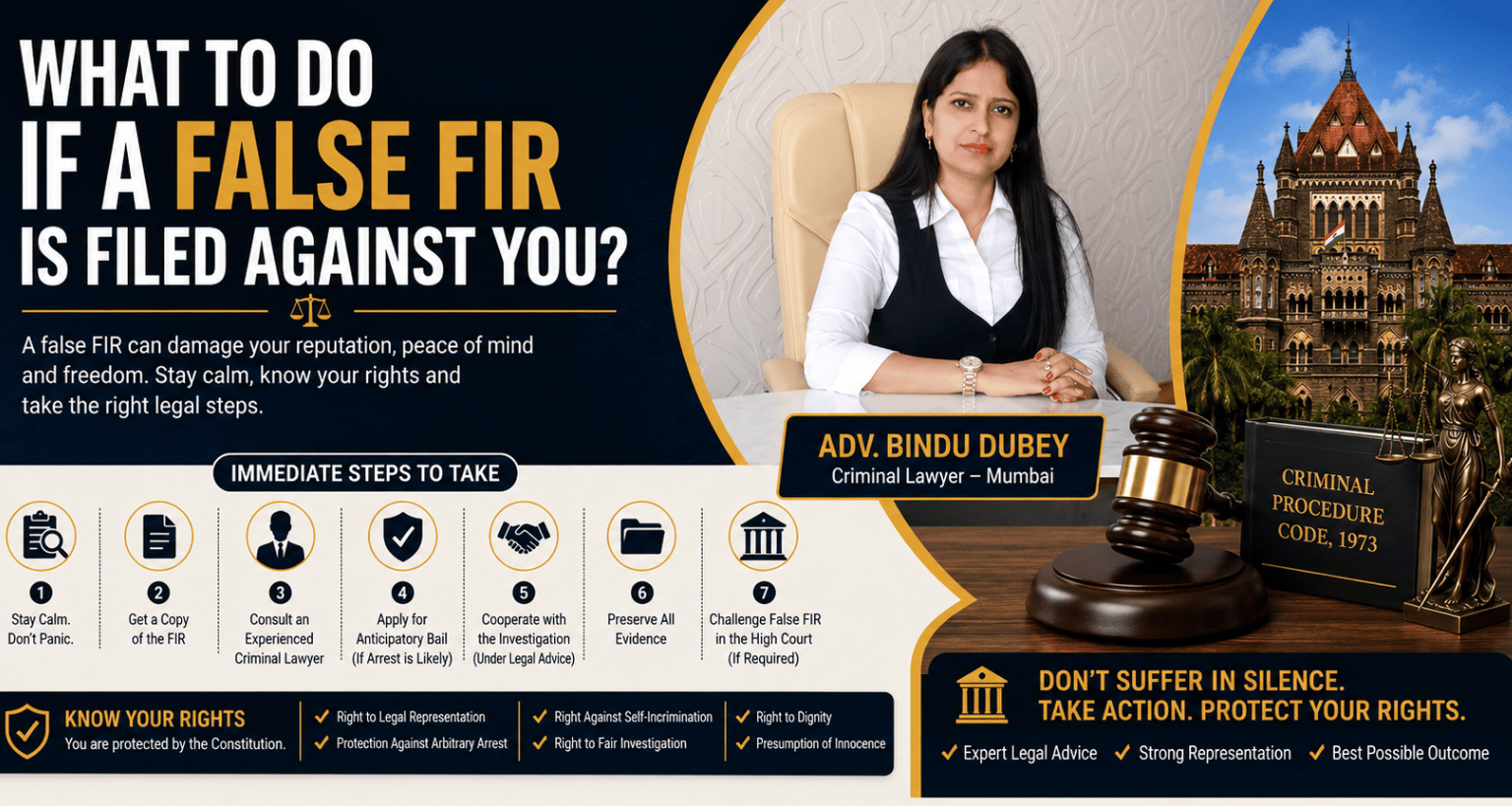
A False FIR can have a devastating impact on an individual’s personal life, professional reputation, and mental well-being. In India, the filing of a First Information Report (FIR) is the first step in initiating a criminal investigation. While the law allows any person to report a cognizable offence, there are situations where an FIR is filed with malicious intent to harass, intimidate, settle personal disputes, or gain an unfair advantage in civil, matrimonial, business, or property matters.
If you have been falsely accused in a criminal case, it is important not to panic. Indian law provides several legal remedies to protect innocent individuals from wrongful prosecution. Understanding your rights and taking timely legal action can make a significant difference in the outcome of your case.
This article explains what to do if a False FIR is filed against you, your legal rights, available remedies, and how an experienced criminal lawyer like Advocate Bindu Dubey can help safeguard your interests.
What Is an FIR?
An FIR (First Information Report) is a written document prepared by the police after receiving information about the commission of a cognizable offence. Once registered, the police begin an investigation into the allegations.
However, registration of an FIR does not mean that the accused is guilty. It merely initiates the investigation process. Every accused person is presumed innocent until proven guilty in a court of law.
What Is a False FIR?
A False FIR is a complaint lodged with fabricated, exaggerated, or misleading allegations against an innocent person. Such complaints are often filed due to:
Family and matrimonial disputes
False allegations may arise during divorce proceedings, domestic disagreements, or custody battles.
Property disputes
Family members or business associates may misuse criminal law to gain leverage in property conflicts.
Business rivalry
Competitors sometimes use criminal complaints to damage the reputation of business owners.
Personal revenge
Personal enmity, workplace conflicts, or neighborhood disputes can result in false criminal allegations.
Political or social pressure
Individuals may become victims of false FIRs due to political rivalry or social conflicts.
Stay Calm and Avoid Panic
Receiving notice of a criminal complaint can be frightening, but reacting emotionally can worsen the situation.
Instead:
- Understand the allegations carefully.
- Avoid confronting the complainant.
- Do not attempt to influence witnesses.
- Contact an experienced criminal lawyer immediately.
- Preserve all evidence that may support your innocence.
Quick legal advice often prevents unnecessary complications.
Obtain a Copy of the FIR
The first step is obtaining a copy of the FIR.
Your lawyer will carefully examine:
- Sections invoked
- Nature of allegations
- Date and time of occurrence
- Witness details
- Documentary evidence mentioned
- Whether the allegations disclose any criminal offence
Many false FIRs contain inconsistencies that become important during legal proceedings.
Consult an Experienced Criminal Lawyer Immediately
One of the biggest mistakes people make is waiting until the police complete the investigation.
Early legal intervention allows your advocate to:
- Analyze the allegations
- Prepare your legal defence
- Communicate with investigating officers
- Protect your constitutional rights
- Apply for anticipatory bail if required
- Challenge illegal police action
An experienced advocate understands how false criminal cases are investigated and defended.
Apply for Anticipatory Bail
If the FIR contains non-bailable offences and there is a possibility of arrest, filing an anticipatory bail application becomes essential.
Anticipatory bail protects a person from arrest while ensuring cooperation with the investigation.
Courts generally consider:
- Nature of allegations
- Criminal history
- Possibility of absconding
- Evidence available
- Whether the complaint appears motivated
Timely filing of anticipatory bail often prevents unnecessary detention.
Cooperate With the Investigation
Even when falsely accused, it is advisable to cooperate with the investigation.
Provide:
- Relevant documents
- Electronic records
- Communication history
- CCTV footage
- Travel records
- Witness information
Non-cooperation may create unnecessary suspicion.
However, always cooperate under legal guidance.
Preserve Every Piece of Evidence
Evidence is the strongest defence against a false FIR.
Useful evidence may include:
Electronic evidence
- WhatsApp chats
- Emails
- SMS
- Social media conversations
Documentary evidence
- Agreements
- Bills
- Receipts
- Bank records
Digital evidence
- GPS location
- Phone records
- CCTV footage
- Audio recordings
- Video recordings
Witnesses
Independent witnesses often play a crucial role in disproving false allegations.
Challenge the FIR Before the High Court
If the FIR is clearly false, malicious, or does not disclose any criminal offence, the accused may approach the High Court seeking quashing of the FIR.
The High Court examines whether:
- The complaint is legally maintainable.
- The allegations constitute a criminal offence.
- The FIR has been filed with mala fide intentions.
- Continuing the investigation would amount to abuse of legal process.
Where appropriate, the court may quash the FIR entirely.
Know Your Constitutional Rights
Every accused person enjoys several constitutional protections.
These include:
Right to legal representation
You have the right to consult and be defended by a lawyer of your choice.
Protection against arbitrary arrest
Police cannot arrest a person mechanically in every case.
Right against self-incrimination
No person can be compelled to confess guilt.
Right to fair investigation
The investigation must remain impartial and unbiased.
Right to dignity
Even during criminal proceedings, every individual deserves respectful treatment.
Can Police Arrest Immediately After an FIR?
Many people believe that registration of an FIR automatically leads to arrest.
This is incorrect.
Police consider several factors before making an arrest, including:
- Seriousness of offence
- Evidence collected
- Possibility of tampering with evidence
- Risk of absconding
- Need for custodial interrogation
Courts have repeatedly emphasized that arrest should not be automatic.
What Happens After Investigation?
Once the investigation is completed, police may:
File a Chargesheet
If sufficient evidence exists.
File a Closure Report
If allegations are found to be false or unsupported.
If the investigation establishes your innocence, the police may recommend closure of the case.
Can You Take Action Against Someone Who Filed a False FIR?
Yes.
If it is established that a complaint was intentionally false and malicious, legal remedies may be available.
Possible actions include:
- Filing a complaint for giving false information.
- Seeking compensation where legally permissible.
- Initiating defamation proceedings if reputation has been harmed.
- Filing appropriate civil proceedings for damages.
An experienced advocate can advise which remedy best suits the facts of the case.
Common Situations Where False FIRs Are Filed
False criminal complaints frequently arise in:
Matrimonial disputes
Including allegations involving cruelty, harassment, or domestic disputes.
Property disputes
Family inheritance and land ownership disagreements.
Financial disagreements
Loan recovery and partnership conflicts.
Workplace disputes
Employment-related allegations.
Business disputes
Commercial disagreements between partners or competitors.
Every case requires a strategy based on its specific facts and evidence.
Mistakes to Avoid After a False FIR
People often worsen their legal position by making avoidable mistakes.
Do not:
- Ignore police notices.
- Threaten the complainant.
- Destroy evidence.
- Post about the case on social media.
- Sign documents without legal advice.
- Give statements without consulting your lawyer.
Careful legal guidance is essential throughout the investigation.
Importance of Early Legal Strategy
The first few days after registration of a false FIR are often the most critical.
An effective defence strategy may involve:
- Reviewing all allegations.
- Collecting supporting evidence.
- Identifying contradictions.
- Protecting against arrest.
- Filing appropriate legal applications.
- Preparing for future court proceedings.
Early action frequently strengthens the defence.
Why Choose Advocate Bindu Dubey?
Facing a false criminal case requires experienced legal representation. Advocate Bindu Dubey provides strategic legal assistance in criminal matters, including false FIR cases, anticipatory bail, quashing petitions, and criminal defence.
Clients receive assistance with:
- Legal consultation
- Criminal defence strategy
- Anticipatory bail applications
- High Court petitions for quashing FIRs
- Representation before police authorities
- Trial court representation
- Protection of constitutional and legal rights
Every case is handled with careful analysis, confidentiality, and a focus on achieving the best possible legal outcome.
Conclusion
A False FIR can be stressful and emotionally overwhelming, but it does not determine your guilt. Indian law provides several safeguards to protect innocent individuals from malicious prosecution. The key is to act promptly, preserve evidence, cooperate with the investigation under legal guidance, and seek assistance from an experienced criminal lawyer.
If you or a family member has been falsely implicated in a criminal case, timely legal advice can help protect your liberty, reputation, and future. With the right legal strategy and professional representation, it is possible to challenge false allegations and pursue justice through the legal system.
FAQs
1. What should I do immediately after a false FIR is filed against me?
Remain calm, obtain a copy of the FIR, preserve evidence, avoid contacting the complainant, and consult an experienced criminal lawyer immediately.
2. Can a false FIR be cancelled?
Yes. Depending on the facts, the police may file a closure report after investigation, or the High Court may quash the FIR if it is legally unsustainable.
3. Will I be arrested immediately after an FIR is registered?
Not necessarily. Arrest depends on the nature of the offence, available evidence, and the requirements of the investigation. In appropriate cases, anticipatory bail may be sought.
4. Can I take legal action against the person who filed a false FIR?
Yes. If the allegations are proven to be intentionally false and malicious, you may have legal remedies such as proceedings relating to false information, defamation, or claims for damages, depending on the circumstances.
5. Why should I hire a criminal lawyer in a false FIR case?
An experienced criminal lawyer can protect your legal rights, advise you during the investigation, seek anticipatory bail where necessary, challenge the FIR if appropriate, and represent you effectively throughout the legal process.