

Top 10 Mistakes People Make After Receiving a Police Notice
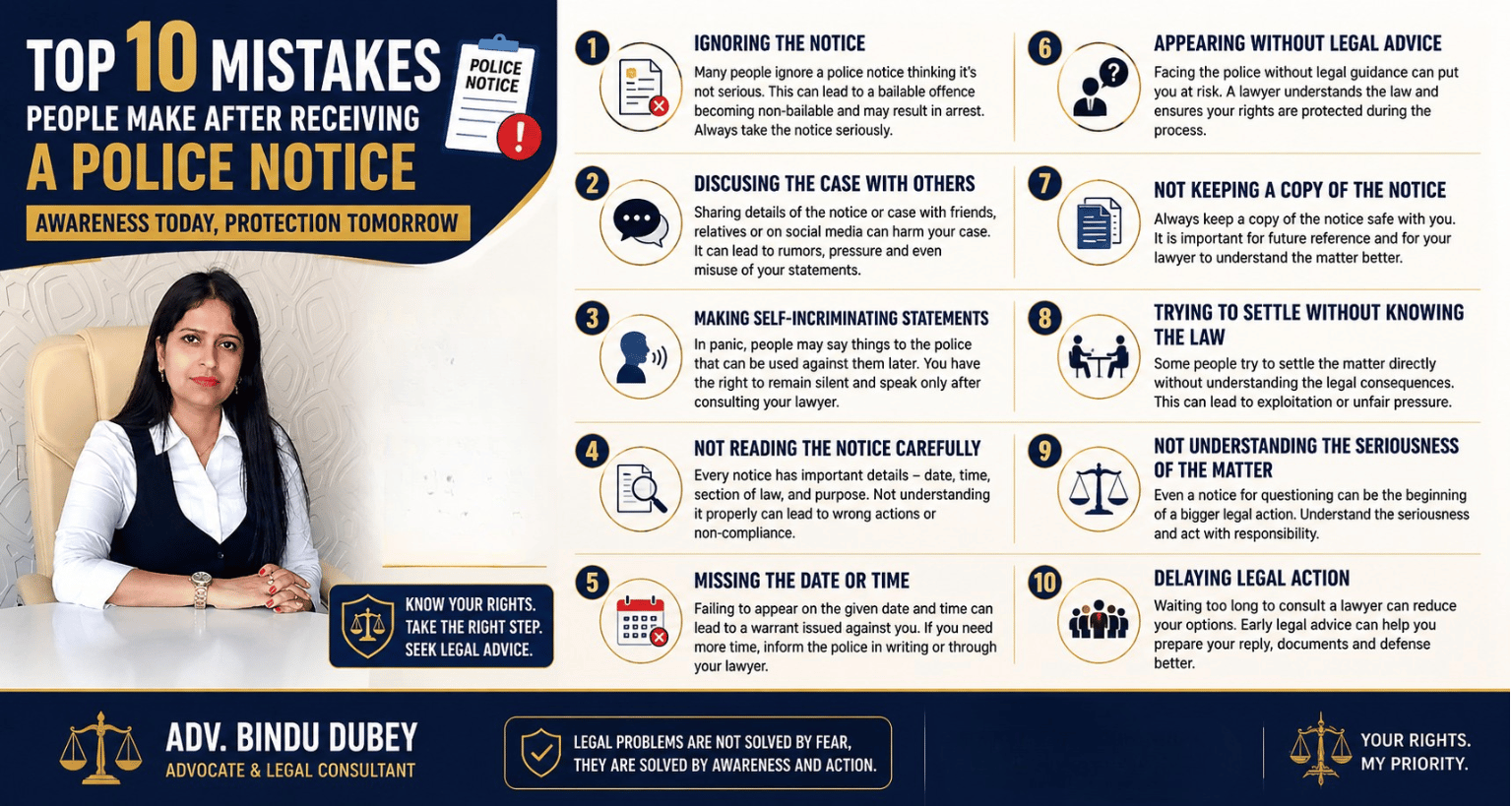
Table of Contents
Receiving a police notice can be stressful, confusing, and intimidating. Many people panic the moment they receive a notice from the police, assuming they are about to be arrested or prosecuted. However, a police notice does not automatically mean you are guilty of any crime. In many cases, it is simply a request to appear before the investigating officer for questioning or to provide information related to an investigation.
The biggest problem arises when individuals react emotionally instead of legally. The Top 10 Mistakes People Make After Receiving a Police Notice often lead to unnecessary legal complications, stronger evidence against themselves, or even criminal proceedings that could have been avoided with proper legal advice.
This guide explains the common mistakes people make after receiving a police notice and how you can respond wisely while protecting your legal rights.
Understanding a Police Notice
A police notice is an official communication issued by the police requiring an individual to appear before an investigating officer, submit documents, answer questions, or assist in an ongoing investigation. In India, police notices are commonly issued under provisions of the Bharatiya Nagarik Suraksha Sanhita (BNSS), depending on the nature of the investigation.
Receiving such a notice does not necessarily indicate that you are an accused. You may be a witness, a complainant, or someone possessing relevant information.
Understanding the purpose of the notice is the first step toward protecting your legal interests.
Why Your Response Matters
Your response after receiving a police notice can significantly influence the direction of the investigation. A calm, legally informed approach helps protect your rights and prevents unnecessary complications.
Ignoring legal procedures, providing incorrect information, or reacting emotionally may weaken your legal position. Therefore, knowing the Top 10 Mistakes People Make After Receiving a Police Notice is extremely important.
Mistake 1: Ignoring the Police Notice
The most common mistake is pretending the notice does not exist. Some people believe that avoiding the police will make the matter disappear.
Ignoring a police notice can result in repeated notices, stronger legal action, or even coercive measures permitted under law. It may also create an impression that you are deliberately avoiding the investigation.
Always read the notice carefully and respond within the prescribed time.
Mistake 2: Panicking Without Understanding the Notice
Many individuals immediately assume they are going to be arrested.
In reality, many police notices are issued merely to gather information during an investigation. Panic often leads people to make irrational decisions, such as making unnecessary admissions or contacting multiple people who may worsen the situation.
Instead of reacting emotionally, understand why the notice has been issued and seek legal guidance if required.
Mistake 3: Appearing Before Police Without Consulting a Lawyer
One of the biggest legal mistakes is visiting the police station without obtaining proper legal advice.
An experienced criminal lawyer can explain:
- Your legal rights
- Your obligations
- The purpose of the notice
- Documents you should carry
- Questions you may be asked
Legal consultation before appearing before police helps prevent accidental self-incrimination and ensures you understand the investigation process.
Mistake 4: Giving False or Misleading Information
Some people believe lying to the police will protect them.
Providing false statements or fabricated documents can create additional legal problems. If contradictions are discovered during the investigation, your credibility may be seriously damaged.
Always provide truthful information while ensuring your legal rights are protected.
Honesty supported by proper legal advice is always the safest approach.
Mistake 5: Signing Documents Without Reading Them
Many individuals sign statements or documents simply because they are asked to do so.
Never sign any document without:
- Reading it completely
- Understanding its contents
- Consulting your lawyer if necessary
A signed statement may later become an important part of the investigation. Therefore, ensure every document accurately reflects your version of events.
Mistake 6: Discussing the Case Publicly
In today’s digital age, many people immediately share details of police notices on:
- Twitter (X)
- YouTube
Public discussions may:
- Harm your legal defence
- Influence witnesses
- Spread misinformation
- Create unnecessary public pressure
Avoid discussing your case publicly until the investigation concludes.
Mistake 7: Destroying or Altering Evidence
Some individuals panic and delete emails, WhatsApp chats, CCTV recordings, financial records, or other documents.
Destroying evidence may create separate legal consequences and may be viewed negatively during the investigation.
Instead, preserve all relevant documents and provide them only after obtaining legal advice.
Mistake 8: Failing to Carry Relevant Documents
If the notice requires specific documents, many people either ignore the requirement or bring incomplete records.
Relevant documents may include:
- Identity proof
- Financial records
- Property documents
- Business agreements
- Digital communications
- Employment records
Keeping documents properly organized helps the investigation proceed smoothly and demonstrates cooperation.
Mistake 9: Assuming Innocence Alone Is Enough
Many innocent individuals believe they do not need legal assistance because they have done nothing wrong.
Unfortunately, investigations depend upon evidence, witness statements, and legal procedures—not merely personal belief.
Even innocent individuals should understand their legal rights before participating in police questioning.
Professional legal advice helps avoid misunderstandings that could unnecessarily complicate the investigation.
Mistake 10: Delaying Legal Action
Some people wait until charges become serious before consulting a lawyer.
Early legal advice can often:
- Clarify your legal position
- Prevent procedural mistakes
- Protect your constitutional rights
- Prepare appropriate documentation
- Reduce unnecessary legal complications
Seeking timely legal guidance is often the most effective way to safeguard your interests.
What Should You Do After Receiving a Police Notice?
The correct response begins with carefully reading the notice. Verify your name, address, reference number, investigating officer, police station, and the date and time mentioned.
Remain calm and avoid making assumptions about the investigation.
If you have doubts about the notice or your legal obligations, consult an experienced criminal lawyer immediately. Carry all requested documents and cooperate respectfully during the investigation while remaining aware of your legal rights.
Maintain copies of all notices, acknowledgements, and communications with the police for future reference.
Your Legal Rights During Police Investigation
Every individual has important legal rights during an investigation.
You have the right to understand the purpose of the notice, seek legal advice, and avoid making statements under coercion. You are also entitled to fair treatment throughout the investigation.
Knowing your rights allows you to cooperate lawfully without compromising your legal position.
Importance of Hiring an Experienced Criminal Lawyer
A criminal lawyer provides much more than courtroom representation.
They help interpret the notice, communicate with investigating authorities, prepare legal responses, review documents, protect constitutional rights, and advise you throughout the investigation.
Experienced legal representation often prevents procedural errors that may otherwise become difficult to correct later.
How Proper Legal Advice Can Prevent Bigger Problems
Many criminal cases become complicated not because of the original allegation but because individuals make avoidable mistakes after receiving a police notice.
Professional legal guidance helps ensure:
- Proper communication with police
- Accurate documentation
- Protection against self-incrimination
- Compliance with legal procedures
- Better preparation for future legal proceedings
Early legal intervention often leads to better outcomes.
Frequently Asked Questions (FAQs)
Does receiving a police notice mean I will be arrested?
No. A police notice generally means the police require your presence or information during an investigation. It does not automatically mean arrest.
Should I ignore a police notice?
No. Ignoring a police notice may lead to further legal action and can negatively affect your position.
Can I consult a lawyer before appearing before police?
Yes. Seeking legal advice before responding to a police notice is highly recommended.
Should I sign every document the police provide?
No. Always read and understand any document before signing it. Seek legal advice if you have doubts.
Can social media posts affect my case?
Yes. Public discussions about an ongoing investigation may negatively impact your legal defence and should generally be avoided.
Conclusion
Receiving a police notice can be unsettling, but your response can make a significant difference. Understanding the Top 10 Mistakes People Make After Receiving a Police Notice helps you avoid unnecessary legal complications and protects your rights throughout the investigation.
Ignoring notices, making false statements, signing documents without understanding them, destroying evidence, or delaying legal advice can all have serious consequences. By staying calm, cooperating with lawful procedures, preserving relevant documents, and consulting an experienced criminal lawyer at the earliest opportunity, you can navigate the process with greater confidence and legal protection.
A police notice is not a conviction-it is an opportunity to respond responsibly, safeguard your rights, and ensure that the legal process is followed fairly.