

BNS vs IPC: Major Changes Every Citizen Should Know
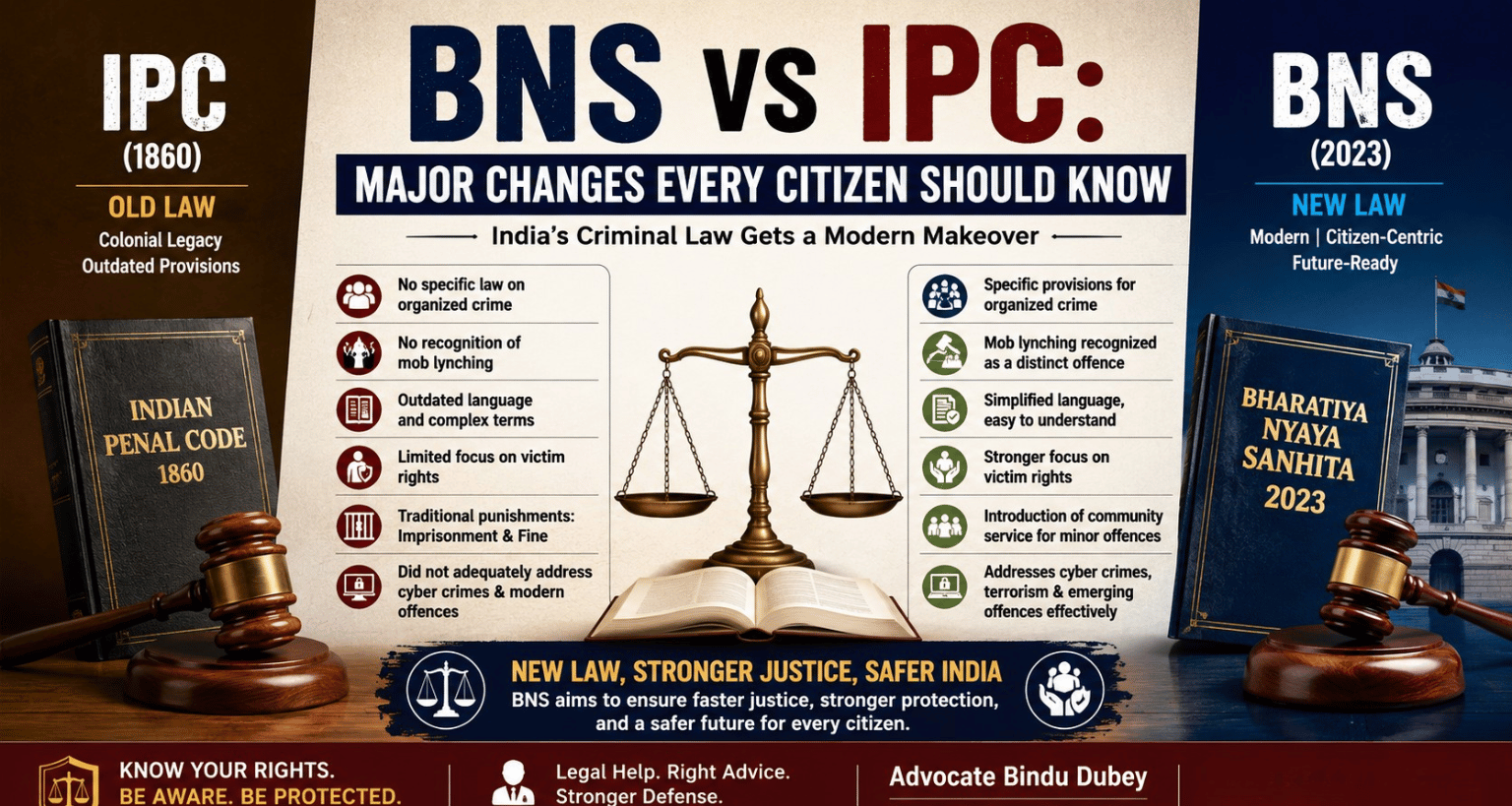
India’s criminal justice system has entered a new era with the replacement of the Indian Penal Code (IPC), 1860 by the Bharatiya Nyaya Sanhita (BNS), 2023. This is one of the most significant legal reforms in independent India, designed to modernize criminal laws and make them more relevant to present-day challenges. The new legislation aims to improve public safety, strengthen victim protection, and ensure quicker justice while addressing modern crimes such as organized crime, terrorism, and cyber-related offences. Understanding BNS vs IPC: Major Changes Every Citizen Should Know is important for every citizen because these laws directly affect the rights, responsibilities, and legal protections available to individuals across the country.
Understanding the Indian Penal Code (IPC)
The Indian Penal Code was introduced during British rule and remained India’s primary criminal law for more than 160 years. It defined offences such as murder, theft, cheating, assault, kidnapping, criminal breach of trust, and many other crimes. While the IPC served as the backbone of India’s criminal justice system for decades, many of its provisions reflected colonial priorities rather than the needs of a modern democratic nation. As society evolved and technology transformed the nature of crime, the need for comprehensive legal reform became increasingly evident.
What is the Bharatiya Nyaya Sanhita (BNS)?
The Bharatiya Nyaya Sanhita (BNS), 2023 is India’s new criminal code that replaces the IPC. It introduces updated legal provisions, simplified language, and stronger punishment for several serious offences. The BNS focuses on ensuring justice through modern legal principles while addressing crimes that have become more common in today’s digital and interconnected world. It forms part of a larger criminal law reform package along with the Bharatiya Nagarik Suraksha Sanhita (BNSS) and the Bharatiya Sakshya Adhiniyam (BSA).
Why Was the IPC Replaced?
The primary objective behind replacing the IPC was to create laws that reflect the realities of contemporary India. The old criminal code lacked specific provisions for several modern offences and required multiple amendments over time. The BNS aims to simplify criminal law, strengthen national security, improve protection for women and children, promote faster investigations, and incorporate technological advancements into the legal system. These reforms seek to make criminal justice more effective and responsive to current challenges.
BNS vs IPC: Major Changes Every Citizen Should Know
One of the biggest differences between the IPC and the BNS is the shift from a colonial framework to a citizen-centric legal approach. The BNS introduces new offences, revises punishment for existing crimes, simplifies legal terminology, and places greater emphasis on public safety and victim rights. These changes are intended to ensure that the criminal justice system remains effective in dealing with both traditional and emerging forms of crime.
Recognition of Organized Crime
Unlike the IPC, which did not provide a comprehensive legal definition of organized crime, the BNS introduces dedicated provisions to deal with criminal syndicates involved in activities such as human trafficking, contract killings, extortion, illegal arms trade, financial fraud, and drug trafficking. This enables law enforcement agencies to investigate and prosecute organized criminal networks more effectively under a unified legal framework.
Stronger Legal Framework Against Terrorism
The BNS strengthens India’s legal approach towards terrorism by incorporating provisions that recognize terrorist acts within the criminal code itself. While special laws addressing terrorism continue to exist, the inclusion of terrorism-related offences within the BNS demonstrates the government’s commitment to enhancing national security and ensuring stronger legal action against activities that threaten the sovereignty and integrity of the nation.
Specific Recognition of Mob Lynching
One of the most notable reforms introduced by the BNS is the specific recognition of mob lynching resulting in death. Under the IPC, such incidents were generally prosecuted under murder provisions without acknowledging the collective nature of the crime. The BNS provides a clearer legal framework for dealing with mob violence, allowing authorities to prosecute such offences more effectively and ensuring greater accountability for those involved.
Introduction of Community Service as Punishment
The BNS introduces community service as an alternative punishment for certain minor offences. This represents a significant shift from the traditional reliance on imprisonment and fines. Community service encourages rehabilitation, promotes social responsibility, and reduces unnecessary incarceration for less serious offences while ensuring that offenders remain accountable for their actions.
Greater Protection for Women and Children
Protecting women and children remains a key priority under the Bharatiya Nyaya Sanhita. The new law strengthens provisions relating to sexual offences, stalking, voyeurism, acid attacks, human trafficking, and crimes against minors. By introducing stricter punishments and clearer legal definitions, the BNS aims to create a safer environment and ensure faster justice for victims of gender-based violence.
Addressing Modern Cyber-Related Crimes
With rapid technological advancement, criminal activities increasingly occur through digital platforms. Although cyber offences are also governed by the Information Technology Act, the BNS complements existing laws by recognizing the importance of electronic evidence and addressing various forms of digital criminal activity. This modern approach strengthens the legal system’s ability to deal with online fraud, identity theft, financial scams, and cyber-enabled offences.
Simplified Legal Language
Many provisions of the IPC contained complex legal terminology that was difficult for ordinary citizens to understand. The BNS adopts clearer and more accessible language, making criminal law easier to interpret for the general public. Simplified terminology improves legal awareness and enables citizens to better understand their rights and obligations under the law.
Impact of BNS on Ordinary Citizens
The introduction of the BNS affects every individual, not just lawyers or law enforcement agencies. Citizens may encounter the criminal justice system as victims, witnesses, complainants, or accused persons. Understanding the new legal provisions helps individuals respond appropriately during police investigations, criminal proceedings, or legal disputes. Greater awareness also reduces the risk of misinformation regarding criminal law.
Improved Investigation and Faster Justice
The BNS supports a more efficient criminal justice system by encouraging timely investigations, better documentation, greater use of digital evidence, and improved accountability among investigating agencies. These reforms are intended to reduce unnecessary delays in criminal proceedings and ensure that victims receive justice more efficiently while protecting the legal rights of the accused.
Importance of Legal Representation Under BNS
Although the criminal law has changed, the importance of experienced legal representation remains the same. Criminal cases often involve complex legal procedures that require professional guidance. Whether an individual is accused of an offence or seeking justice as a victim, consulting an experienced criminal lawyer helps protect legal rights, ensures compliance with procedural requirements, and provides effective representation before the courts.
How Advocate Bindu Dubey Can Help
Advocate Bindu Dubey provides experienced legal assistance in criminal matters arising under the Bharatiya Nyaya Sanhita. From bail applications and anticipatory bail to trial representation, cybercrime cases, financial offences, domestic violence matters, and other criminal disputes, professional legal advice can help clients understand their rights and navigate the complexities of India’s new criminal justice system with confidence.
Conclusion
The replacement of the Indian Penal Code with the Bharatiya Nyaya Sanhita marks a historic transformation in India’s criminal justice framework. By introducing modern legal concepts, addressing emerging forms of crime, strengthening victim protection, and simplifying legal language, the BNS seeks to create a more effective and citizen-focused criminal law system. Understanding BNS vs IPC: Major Changes Every Citizen Should Know enables every citizen to stay informed, protect their legal rights, and make better decisions whenever they encounter criminal legal issues. Consulting an experienced criminal lawyer like Advocate Bindu Dubey ensures that individuals receive reliable legal guidance under India’s new criminal laws.