

How to File a Consumer Complaint Against Online Fraud in India – Legal Guide by Adv. Bindu Dubey
Introduction
Online fraud cases in India are increasing rapidly due to the growth of digital payments, e-commerce platforms, online banking, and social media transactions. Every day, thousands of consumers become victims of cyber fraud, fake online shopping websites, UPI scams, phishing attacks, credit card fraud, and investment scams. Many people lose money online without understanding their legal rights or the proper procedure to file a complaint.
This detailed legal guide by Adv. Bindu Dubey explains how to file a consumer complaint against online fraud in India, the legal remedies available, important cyber laws, consumer protection rights, and the steps victims should follow immediately after becoming a victim of online fraud.
What is Online Fraud?
Online fraud refers to any illegal activity conducted through the internet to cheat or financially exploit a person. Fraudsters use fake websites, phishing links, social media scams, mobile applications, and fraudulent payment requests to steal money or personal information.
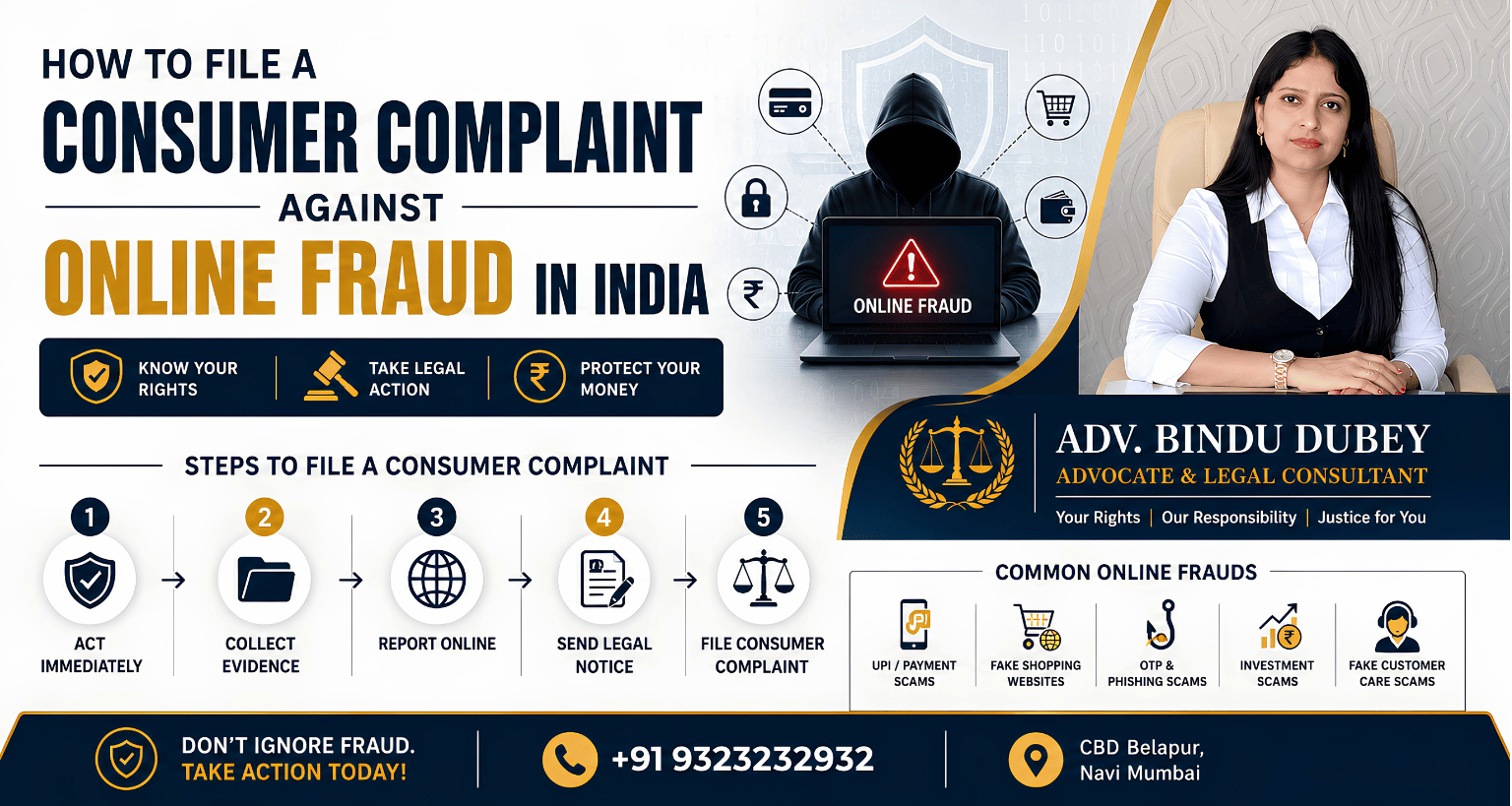
Common types of online fraud in India include UPI payment scams, credit card fraud, fake shopping websites, OTP scams, online job fraud, investment and trading scams, social media marketplace fraud, cyber extortion, fake customer care scams, and identity theft. Under Indian law, online fraud is both a cybercrime and a consumer rights violation.
Consumer Rights Against Online Fraud in India
Consumers in India are protected under the Consumer Protection Act, 2019 and the Information Technology Act, 2000. If a consumer suffers financial loss due to online fraud, they have the legal right to seek compensation, refund, damages, and legal action against the responsible party.
A victim of online fraud has the right to file a consumer complaint, seek compensation for financial loss, demand a refund of money, report cybercrime to authorities, take legal action against fraudsters, approach consumer courts, and file an FIR with police authorities. Adv. Bindu Dubey advises consumers to act quickly because immediate reporting increases the chances of fund recovery and legal protection.
Immediate Steps to Take After Online Fraud
If you become a victim of online fraud, taking immediate action is extremely important. Delay in reporting may reduce the possibility of recovering money or tracing the fraudster.
Block Bank Account or Card
Immediately contact your bank and block your debit card, credit card, UPI account, net banking access, and wallet services. Most banks provide emergency customer support for fraud reporting.
Report Cyber Fraud Helpline
Victims should immediately call the National Cyber Crime Helpline Number 1930 to report financial cyber fraud. Quick reporting can help authorities freeze fraudulent transactions before the money is transferred further.
Save Evidence
Always keep proof related to the fraud, including screenshots, transaction receipts, chat messages, emails, phone numbers, website links, and payment confirmations. These documents become important legal evidence during investigation and consumer complaint proceedings.
How to File a Consumer Complaint Against Online Fraud in India
Filing a consumer complaint against online fraud in India involves multiple legal steps. Victims can use both cybercrime reporting systems and consumer court remedies.
Step 1: File Complaint on Cyber Crime Portal
Victims can report online fraud on the official National Cyber Crime Reporting Portal. Information generally required includes name and contact details, transaction details, fraud amount, bank details, screenshots and evidence, and fraudster information. This portal helps cybercrime authorities investigate digital fraud cases.
Step 2: Lodge FIR at Police Station
Victims can also file an FIR at the nearest police station or cybercrime police station under relevant sections of Indian law. Important laws applicable in online fraud cases include the Information Technology Act, 2000, Indian Penal Code (IPC), and Consumer Protection Act, 2019. An FIR strengthens the legal case and helps initiate criminal investigation against the accused.
Step 3: Send Legal Notice
In many cases, a legal notice can be sent to e-commerce platforms, fraudulent sellers, payment gateways, banks, and service providers. A legal notice prepared by an experienced advocate like Adv. Bindu Dubey may help in obtaining refunds or settlement before court proceedings.
Step 4: File Consumer Complaint in Consumer Court
Victims of online fraud can approach the Consumer Commission if services were deficient or negligence occurred. Consumer complaints can be filed against online shopping companies, payment service providers, banks, digital wallet companies, and e-commerce platforms.
The complaint should include facts of the case, financial loss suffered, supporting documents, and relief or compensation demanded. Consumer courts can order refund, compensation, and damages.
Legal Remedies Available for Victims
Indian law provides several legal remedies for victims of online fraud.
Compensation Claim
Victims can claim compensation for financial loss, mental harassment, emotional stress, service deficiency, and negligence. Consumer courts may award monetary compensation depending on the case facts.
Refund of Money
If fraud occurred due to negligence by a bank, platform, or payment service provider, the consumer may seek a refund. Banks are required to follow RBI cyber fraud guidelines and consumer protection standards.
Criminal Action Against Fraudsters
Police authorities can initiate criminal proceedings against fraudsters under cybercrime and cheating laws. Punishments may include imprisonment, fines, asset seizure, and criminal prosecution.
Important Laws Related to Online Fraud in India
Several Indian laws protect consumers against cyber fraud and online scams.
Information Technology Act, 2000
This law deals specifically with cybercrimes, hacking, data theft, identity theft, and online fraud. Relevant provisions include Section 43, Section 66, Section 66C, and Section 66D. These sections deal with cheating by personation using computer resources and unauthorized access.
Consumer Protection Act, 2019
This Act protects consumer rights against unfair trade practices and defective services. Online consumers are also covered under this law. E-commerce companies and digital service providers must ensure fair and transparent services.
Indian Penal Code (IPC)
Fraud cases may also involve IPC provisions related to cheating, criminal breach of trust, forgery, and identity theft. Police authorities may apply multiple legal provisions depending on the nature of fraud.
Common Online Fraud Scams in India
Understanding common online fraud methods can help consumers stay protected.
UPI Fraud
Fraudsters trick users into approving “collect requests” instead of receiving payments.
Fake Shopping Websites
Consumers make payments for products that are never delivered.
OTP Fraud
Scammers obtain OTPs and withdraw money from bank accounts.
Fake Investment Schemes
Fraudulent platforms promise unrealistic returns and cheat investors.
Social Media Fraud
Fake sellers advertise products on social media and disappear after payment. Adv. Bindu Dubey advises consumers to verify websites and avoid sharing sensitive banking information online.
Tips to Protect Yourself From Online Fraud
Consumers should follow preventive safety measures to avoid becoming victims of cyber fraud.
Never Share OTP or PIN
Banks never ask customers for OTP, CVV, or passwords over calls or messages.
Verify Website Authenticity
Always check website security, company details, customer reviews, and contact information before making online payments.
Avoid Unknown Links
Do not click suspicious links received through SMS, WhatsApp, or email.
Use Strong Passwords
Maintain secure passwords and enable two-factor authentication for banking apps.
Monitor Bank Transactions
Regularly check bank statements and transaction alerts for suspicious activity.
Role of an Advocate in Online Fraud Cases
An experienced advocate plays an important role in protecting consumer rights in online fraud matters. Adv. Bindu Dubey can assist clients in drafting legal notices, filing consumer complaints, providing cybercrime legal guidance, supporting FIR-related procedures, pursuing compensation claims, representing clients before courts, and conducting settlement negotiations.
Professional legal assistance improves the chances of successful recovery and proper legal action.
Why Consumer Courts Are Important
Consumer courts provide an affordable and effective legal remedy for consumers suffering financial losses due to online fraud. Benefits of approaching consumer courts include faster dispute resolution, compensation for damages, affordable legal procedures, consumer-friendly systems, and accountability for service providers.
Victims of digital fraud should not hesitate to use consumer protection laws to safeguard their rights.
Challenges in Online Fraud Cases
Although laws exist, victims often face practical challenges such as difficulty tracing fraudsters, delays in cyber investigations, cross-border fraud operations, fake identities used by criminals, and lack of digital awareness. Therefore, early legal action and professional guidance are extremely important in cyber fraud matters.
Importance of Legal Awareness
Many consumers lose money because they are unaware of their legal rights and reporting procedures. Public awareness regarding cybercrime laws and consumer protection is necessary to reduce online fraud incidents in India.
Consumers should know that online fraud is not just a financial issue but also a legal violation for which remedies are available under Indian law. Adv. Bindu Dubey encourages victims to immediately report cyber fraud and seek proper legal assistance instead of ignoring the issue.
Conclusion
Online fraud has become a serious concern in India due to the rapid expansion of digital transactions and internet-based services. Victims of cyber fraud often suffer financial loss, mental stress, and emotional harassment. However, Indian law provides strong legal protection through the Consumer Protection Act, Information Technology Act, and cybercrime reporting mechanisms.
Consumers who become victims of online fraud should immediately report the incident, preserve evidence, contact their bank, file cybercrime complaints, and seek legal advice. Filing a consumer complaint against online fraud in India is an important step toward obtaining compensation, refunds, and justice.
Adv. Bindu Dubey provides professional legal assistance for consumer disputes, cyber fraud matters, online scam cases, and consumer court proceedings. With proper legal guidance and timely action, victims can effectively protect their rights and pursue legal remedies against online fraudsters in India.