

Criminal Advocate: 5 Specialists to Match to Your Case
The right criminal advocate is the one whose daily work matches your exact problem, who appears in the court that will hear your case, and who talks to you directly. If you face arrest, you need a bail specialist. If an FIR is false or badly drafted, you need someone who files and quashes. For a long contest, pick a trial advocate. Drug charges call for an NDPS specialist, and online fraud calls for a cyber crime advocate.
The difficulty is time. A police notice, an arrest or a chargesheet gives you hours, not weeks. A search for a criminal advocate in Navi Mumbai, Maharashtra, returns dozens of profiles that all claim every specialty, and no advocate is equally strong in all of them.
This article sets out five types of criminal advocate. Each gets the same three checks: when you need one, what to verify before you hire, and how Adv. Bindu Dubey & Associates, a criminal and family law firm in CBD Belapur, handles that kind of case.
1. Bail and anticipatory bail advocate
When you need this advocate
You need a bail advocate the moment you are arrested, or the moment you learn that a complaint may lead to your arrest. The two situations use different applications, so the date of arrest decides which application you file. Since the BNSS replaced the CrPC in July 2024, the section numbers have changed as well.

| Type | When it applies | Provision under BNSS | Where filed |
|---|---|---|---|
| Regular bail | After arrest | Sections 478 and 480 (earlier CrPC 436 and 437) | Magistrate or Sessions Court, then High Court |
| Anticipatory bail | Before arrest, when you fear it | Section 482 (earlier CrPC 438) | Sessions Court or High Court |
| Interim bail | Short-term relief while the main application waits | Sought within the pending bail matter | Court hearing that application |
Anticipatory bail protects you before arrest and regular bail frees you after it, so file the one that matches where you stand today.
What to check before you hire
Ask whether the advocate files in Sessions Courts and the Bombay High Court, not only before magistrates. A refusal at one level moves to the next, and you want the same hands on your file. Also ask whether you can reach them at night, because arrests do not follow court hours.
- Will the advocate speak to you directly, or through a junior or agent?
- Can they take an urgent call after court hours?
- Do they explain the likely timeline without promising a result?
How Adv. Bindu Dubey & Associates handles it
The firm files regular, anticipatory and interim bail in the courts at CBD Belapur, Panvel, Thane and Alibaug, and in the Bombay High Court. Its own estimate is that bail in a minor offence can take 1 to 3 days. A major non-bailable offence in the Sessions or High Court may take 1 to 2 weeks. If a complaint is filed against you on a Monday, expect a first outcome within days for a minor offence and within a fortnight for a serious one.
The first step is a paid consultation of around one hour, in person or by phone. You explain the full background and receive guidance and a roadmap. The fee structure is shared with you, and drafting and filing begin once you pay in advance. You speak directly with the advocate, with no middleman.
2. FIR filing and quashing advocate
When you need this advocate
You need this advocate in two opposite situations. As a victim, you want an FIR registered correctly, with the exact incident and the right sections. As an accused person, you want a false or exaggerated FIR quashed by the High Court. The FIR is registered under Section 173 of the BNSS (earlier Section 154 CrPC). A quashing petition rests on Section 528 BNSS (earlier Section 482 CrPC).
A weak FIR drives the whole case, so it is cheaper to draft it well or challenge it early than to fight its consequences for years.
What to check before you hire
Ask to see how the advocate drafts a complaint. A good draft states dates, places and the sequence of events in plain words and leaves the section numbers to the police and the law. For quashing, ask whether the advocate regularly appears in the Bombay High Court. Be careful with anyone who guarantees quashing. The High Court examines whether the allegations disclose an offence at all, and it does not accept every petition.
How Adv. Bindu Dubey & Associates handles it
For filing an FIR, the process has three steps: consultation, drafting and support. The advocate drafts the written complaint with the exact incident and the right sections, then supports you. NRIs who need an FIR filed in India can use the same process.
On the accused side, the firm regularly represents clients in quashing petitions before the Bombay High Court. It also responds quickly to arrest-related emergencies at local police stations.
3. Trial advocate
When you need this advocate
You need a trial advocate once the police file a chargesheet and the case is committed for trial in a Magistrate or Sessions Court. Bail may already be settled by then, but the verdict is not. Trials often run for years, with evidence, witness examination and arguments spread across many hearings.

Bail gets you out, but a trial advocate gets you acquitted, and the two skills are not always found in the same person.
What to check before you hire
Ask who will argue at each hearing. Trials are won on cross-examination and on a clean reading of the evidence, so you want the advocate you met to be the one standing in court, not a stranger sent on the day. Ask how the advocate tracks hearing dates and documents across a long case. Also check that the same advocate can take the matter to appeal, so you do not change counsel midway.
How Adv. Bindu Dubey & Associates handles it
The firm builds a strategy for each trial and argues it on the law and the facts of that case. The lead advocate holds an LLM (Gold Medalist) and is pursuing a PhD in Criminology. The firm says this shapes research-driven drafting. A team of 15 lawyers covers hearings at all court levels, and Adv. Bindu Dubey handles the key aspects herself. The firm also takes trial matters for NRI clients across India.
4. NDPS advocate
When you need this advocate
You need an NDPS advocate when you are arrested or named under the Narcotic Drugs and Psychotropic Substances Act. Bail is harder here than in most cases. Where the quantity is commercial, Section 37 of the Act sets twin conditions that the court must be satisfied about before granting bail. Whether the quantity is small, intermediate or commercial is therefore the first fact a good advocate checks.
In NDPS cases the quantity and the procedure followed at seizure often decide the outcome, so the advocate must know both.
What to check before you hire
Ask how the advocate reviews the police’s compliance with the Act. The questions include whether the search, seizure and sampling followed the mandatory safeguards, such as those in Section 50 for a search of the person, and whether the quantity was weighed and recorded properly. Also ask about experience in the court that will hear your matter, since NDPS cases are heard in different benches across Mumbai, Navi Mumbai and Thane.
How Adv. Bindu Dubey & Associates handles it
The firm handles bail, anticipatory bail, discharge, cross-examination, trial and acquittal in NDPS cases, for domestic and international clients. Its courts include Belapur, Panvel, Thane, Alibaug, Dindoshi, Andheri, the Mumbai courts and the Mumbai High Court. A family in Navi Mumbai whose relative is held in a drug case can therefore stay with one firm from the first bail application through to trial.
5. Cyber crime advocate
When you need this advocate
You need a cyber crime advocate if you are a victim of hacking, phishing, blackmail, cyber-stalking or card fraud, or if you are accused in an online fraud or company data case. Victims need a complaint registered with the Cyber Crime Cell and content taken down. Accused persons need bail and a defence that handles electronic evidence.
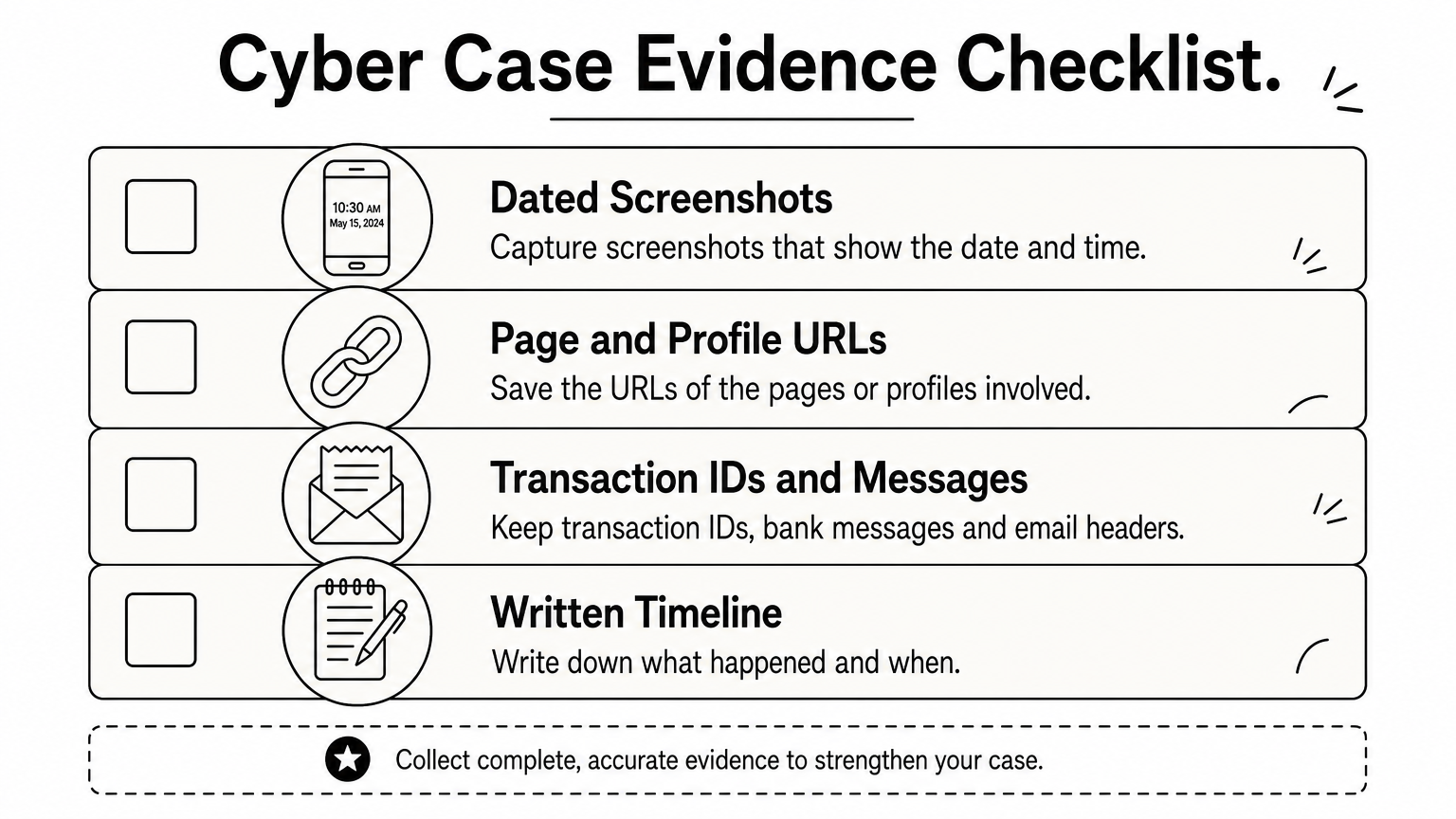
In cyber cases the first hours decide how much evidence survives, so preserve everything before you call anyone.
What to check before you hire
Ask whether the advocate works with the IT Act alongside the criminal code, because most online offences touch both. Then prepare your own record before the consultation:
- Screenshots with dates and times
- URLs of the pages or profiles involved
- Transaction IDs, bank messages and email headers
- A written timeline of what happened and when
How Adv. Bindu Dubey & Associates handles it
The firm helps individuals and companies with hacking, data theft, online fraud, blackmail and cyber-stalking. It helps register complaints in the Cyber Crime Cell and handles IT Act matters. It also seeks removal of defamatory or objectionable content and deals with bail in company fraud cases involving an employee or partner. Adv. Bindu Dubey is President of the (MH) Cyber Council.
How to choose and what to do next
Pick the advocate by the problem in front of you. Bail and arrest need a bail specialist, a bad FIR needs a drafter and quasher, a long case needs a trial advocate, drugs need an NDPS specialist, and online offences need a cyber crime advocate. In every case, confirm that you will speak to the advocate directly and that the advocate appears in the court that will hear your matter.
If your case falls into one of these five types, speak directly with Adv. Bindu Dubey to fix a consultation by phone or in person at CBD Belapur. Meetings run on appointment from 10 am to 9 pm, seven days a week.